Brooklyn Roses
85 min, a film memoir
Brooklyn Roses was made ten years after the filming of her two-part feature, using the same actors to portray her characters first in the 1950s and then in 1960s. Brooklyn Roses incorporates the dramatic narrative footage of her childhood and contemporary documentary footage to re-examine her childhood and her mother’s feminist struggles in the 1950’s and 60’s working class Brooklyn.
When her mother dies, Noschese returns to her childhood home to decide what to keep and what to discard. When her mother was still alive, she shot June Roses in the same house. Sorting through her mother’s belongings and props left over from the film, she realizes how her perceptions have changed and that the characterization of her mother in the earlier film did not tell the whole story. Recording new documentary footage, Noschese deconstructs the fictional narrative and asks compelling questions about narrative and documentary storytelling and each form’s unique capacity to convey truth.
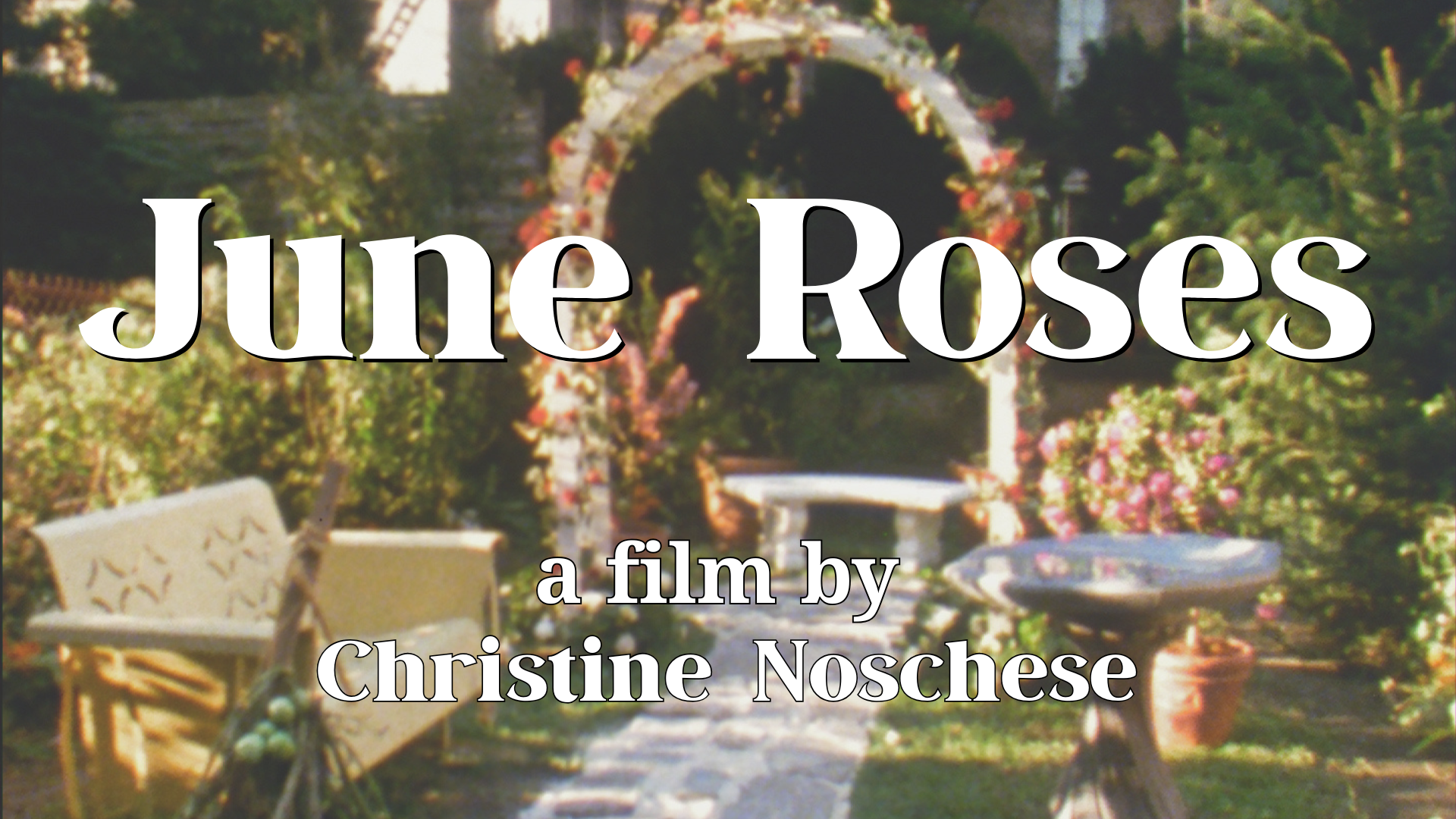
June Roses (1991)
41 min, a narrative short
June Roses (1991) is a short film about Christine’s early childhood and the first half of what would eventually become a feature-length film. June Roses is set in the 1950s when women’s role as wife and mother was restricted and needs for self-expression and fulfillment thwarted. It is the story of Rosemarie, who Christine named herself in the film, a dark-eyed five-year-old child who adores her mother Dolly (the real nickname of Christine’s mother). Dolly is creative, eccentric and energetic woman who wants and believes she can have more out of life for herself and her daughter than the other family members in her working-class household. Rosemarie imitates her and with her encouragement has clearly become an outspoken, creative child. Dolly, in her manic need for self-expression, puts her support for her husband’s career and household chores second. Conflicts in the family grow worse. Rosemarie sees her mother’s repression turn to aggression toward everyone in the family except her. Dolly’s anger and self-doubt lead her to be institutionalized. Rosemarie misses her mother because there is no one to stick up for her now. Finally Dolly returns home, both her spirit and desires crushed. Her mother can no longer support her. In Dolly’s last effort to save her child from the environment that destroyed her, she leaves Rosemarie in a ritzy boarding school which replicates her own institutionalization. Rosemarie has not yet lost her spirit and we hope she never will.