Documentary and Fiction
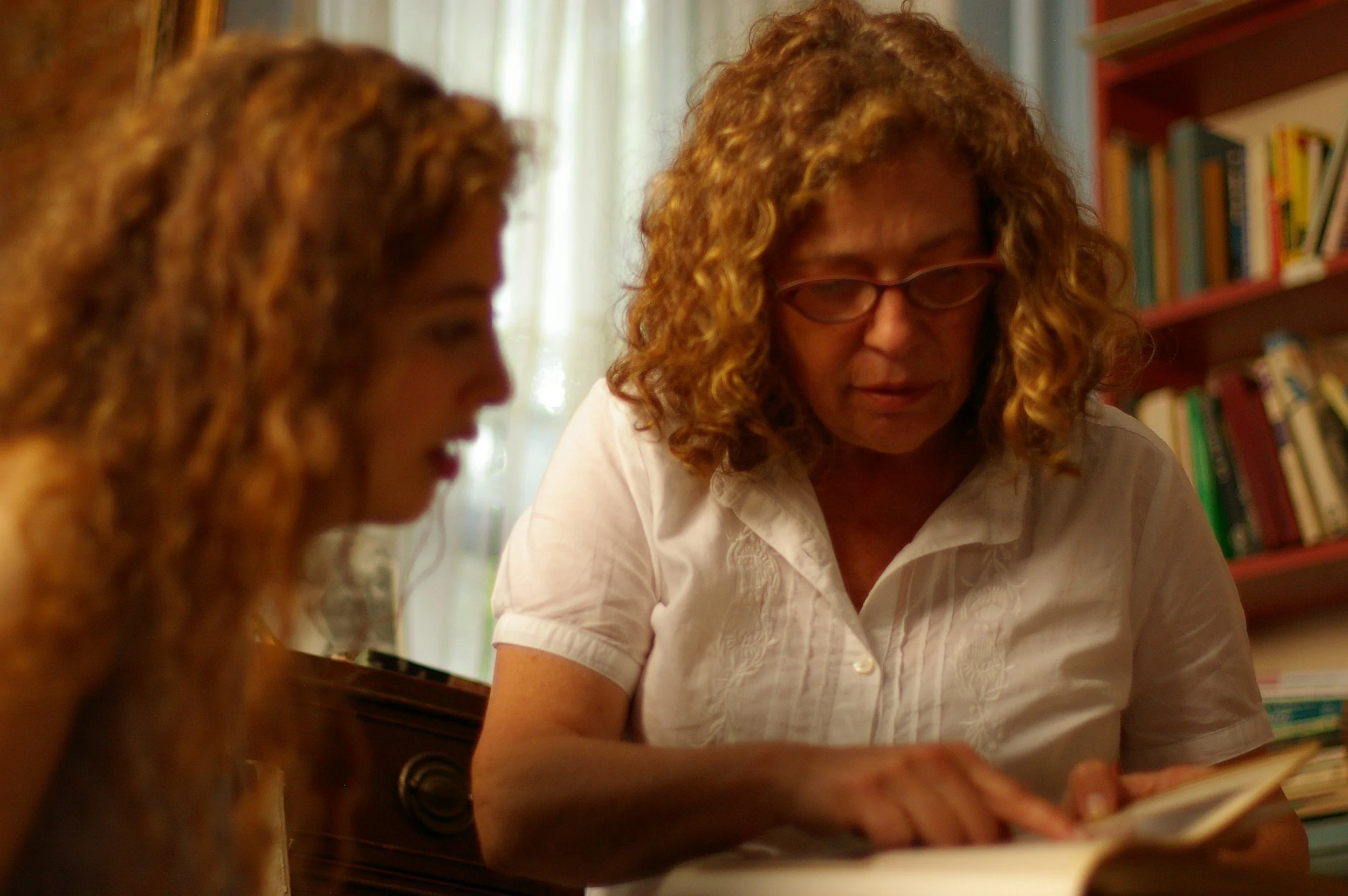
It all started in 1988…
when Christine Noschese had written a script for a short film focusing on her mother’s repressed ambitions in the 1950s. She changed the names of her family members and reconstructed a narrative that reflected her personal experience. It wasn’t until reading a copy of Backlash in 1991, Susan Faludi’s research on the undeclared war against American women that she recognized the extent of the backlash of women in the 1980s echoed the constriction of women’s freedoms after World War II. After receiving funding from the American Film Institute Independent Filmmaker’s Fund, the New York Women in Film Completion Fund, and the distribution revenue of her previous film Metropolitan Avenue, Christine directed June Roses. It premiered at MoMA in the New Directors, New Films Festival in 1992.
Ten years later, Christine felt she hadn’t told the whole story of how the three generations of women in her family navigated their situation. Her new script was set in the 1960s. She invited the original cast to play the older version of their characters, whose narratives reflected the changing times. All of the original cast agreed to come back to work on the film. The extended version of June Roses showed at Woman in Film & Television at Tribeca Film Festival and Malafemmina: a celebration of the cinema of Italian American women at NYU’s Casa Italiano Zerilli-Marimo’ as well as the North Hampton Film Festival at Smith College.
The film’s tour came to a halt at the passing of Christine’s mother a year later. Following her death, the house she had grown up and filmed in, was up for sale. Christine, facing a physical and emotional challenge, decided to use the opportunity to reflect on her changing narrative and personal evolution to bring closure to her mother’s story. Filming herself sorting through her mother’s belongings as she emptied her childhood home, Christine had begun the process of directing an introspective documentary on both her mother’s story and her impact on Christine’s life. By stitching together the fictional narrative footage in June Roses with her documentary footage and unifying it with narration, she had created Brooklyn Roses, a blend of documentary and fiction.
“I wanted to continue to examine the narrative of my life within the context of changing cultural expectations for women,” says Christine. “I wanted to use my personal journey for others to connect with working-class narratives that aren’t always explored.”
Festivals & Screenings
Best Documentary Feature Film at Author’s International Film Festival / Fic Autor Guadalajara, Mexico
Best Documentary Feature at Golf of Naples Independent Film Festival Naples, Italy
Outstanding Documentary Feature at Art of Brooklyn Film Festival New York, US
Official Selection
Hoboken International Film Festival - New York
Woodstock Museum Festival - New York
Seneca Film Festival - New York
Fine Arts Film Festival - Venice, California
New York Women in Film and Television - New York
Berkshire Conference of Women Historians - Hofstra University
Italian American Experience Lecture Series - Hofstra University